 eBay Calculator
Selling abroad on eBay without paying the international fee
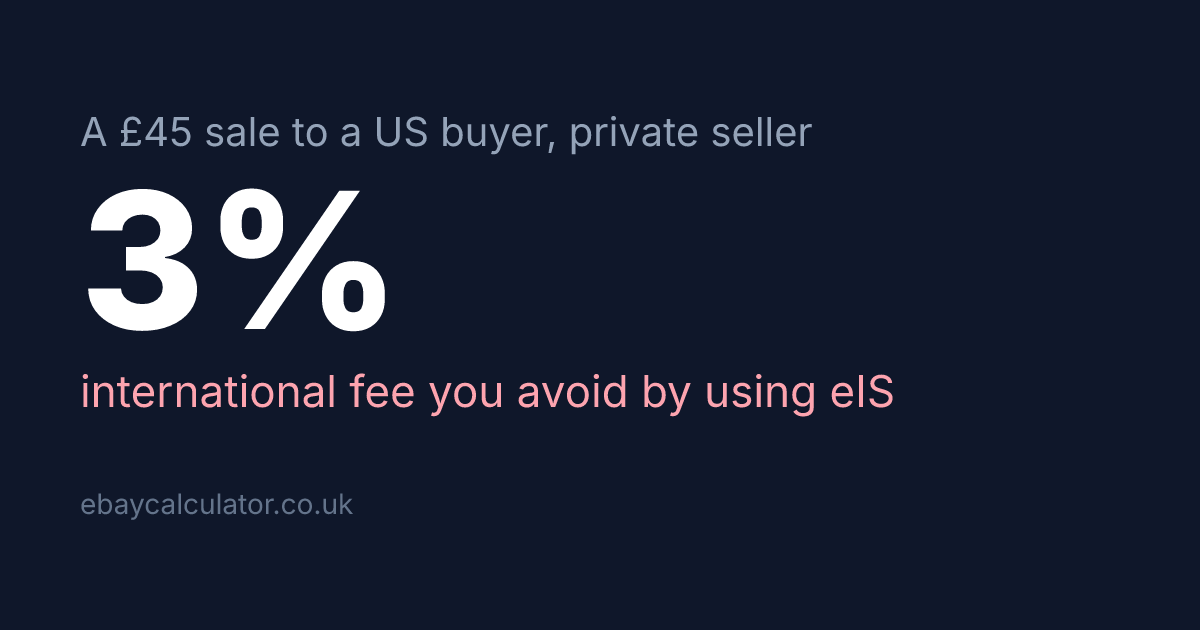
If you're a UK private seller, an overseas sale is now one of the few times eBay takes a cut. If you're a business seller, it adds up to two percentage points to your fees. Since August, eBay has been moving UK sellers onto eBay International Shipping (eIS), and on eligible listings that fee doesn't apply.
What changed
eBay says eIS is replacing the Global Shipping Programme. Eligible sellers are being enrolled in stages from August 2026, and their eligible listings switch over automatically. eBay's eIS page says it reaches buyers in 195+ countries, up from 105, and that your payout is protected once the parcel is accepted at the hub, even if the buyer later returns the item.
The process is similar to before: you post the item to a UK hub and eBay handles the international delivery. The hub address is different from the Global Shipping Programme one, so use the address eBay gives you for eIS.
eBay's fee pages were last updated on 5 November 2026. Both the business and private versions say the same thing: if your registered address is in the UK and you offer eIS on eligible listings, you won't be charged an international fee when an eligible item sells.
What the international fee costs without eIS
If you post abroad yourself, eBay charges an international fee on the whole sale: item price, postage and any taxes. The rate depends on who you are and where the buyer is.
| Seller | Buyer location | International fee |
|---|---|---|
| Private | Anywhere outside the UK | 3% |
| Business | Eurozone & Northern Europe | 1.05% |
| Business | US & Canada | 1.8% |
| Business | All other countries | 2.0% |
The private seller rate includes VAT. Business rates don't include VAT.
Example: a private seller
A private seller sells a £40 jacket to a US buyer and charges £5 postage, so the sale total is £45.
- Posting it yourself: international fee of 3% = £1.35
- Through eIS: £0
UK private sellers pay no final value fee or regulatory operating fee outside motors. That makes the international fee the only selling fee on this sale, and eIS removes it. With eIS, a sale abroad costs the same in eBay fees as a sale in the UK: nothing.
Example: a business seller
A business seller that isn't VAT-registered sells a £40 book (9.9% category) to a US buyer, with £5 postage. The total is £45. Fees include 20% VAT, because sellers who aren't VAT-registered can't reclaim it.
| Fee | Posting it yourself | Through eIS (same £45 total) |
|---|---|---|
| Final value fee (9.9%) | £5.35 | £5.35 |
| Per-order fee | £0.48 | £0.48 |
| Regulatory operating fee (0.35%) | £0.19 | £0.19 |
| International fee (1.8%) | £0.97 | £0 |
| Total | £6.99 | £6.02 |
On this sale, eIS saves £0.97. It would be £0.57 for a buyer in the Eurozone and £1.08 for a buyer in Australia.
The real saving with eIS can be bigger. On the business fee page, eBay says that with eIS, the final value fee on postage is worked out on your cost to post to the UK shipping hub, not on the international postage the buyer pays. If you offer free UK postage, there's no final value fee on postage at all. Say you charge £3 to reach the hub, so the total is £43. Without the international fee, the fees on that sale come to £5.77.
Where this ties in with Vinted
Most of the pressure on private selling fees comes from Vinted. Value Added Resource compared Vinted's old and new UK terms. It reports that from 8 October, Vinted stopped calling its mandatory buyer charge a "Buyer Protection fee" and now calls it a "Vinted fee". The terms don't indicate a change to how it's calculated. Value Added Resource also reports a UK regulator's (the CMA's) estimate that Vinted had 50–60% of online consumer-to-consumer clothing sales in the UK in 2025.
eBay already lets private sellers in the UK sell for free. On eligible listings, eIS now makes overseas sales free too, so you don't need to block international buyers to avoid fees. If you've excluded overseas buyers because of the 3% fee, it's worth looking again.
What to do now
Check which of your listings use eIS
eBay says you'll be switched over automatically, but only eligible listings qualify. Look at the postage settings on your best sellers and check that international delivery is going through eIS, not through your own postage option. Any listing you post abroad yourself still pays the full international fee.
Decide whether to post abroad yourself at all
For low-value items, posting abroad yourself rarely makes sense once you add the fee. A business seller sending a £45 order to the US pays £0.97 extra. A private seller pays £1.35. Posting yourself can still be worth it for bulky or unusual items that eIS won't take, but price the fee in.
Work out the eIS version of a sale correctly
In our fee calculator, set the buyer as UK for an eIS sale, because no international fee applies. In the postage box, enter what you charge to reach the UK hub, not the international postage. That matches how eBay calculates the final value fee on postage under eIS.
Don't confuse this with currency conversion
The international fee is separate from eBay's currency conversion charge. That charge applies when eBay converts your money for items listed or sold on another eBay site. From 1 December 2026 it rises from 2.5% to 2.75% for UK-registered sellers, according to both fee pages.